

The Andaman Islands are known for turquoise water, tropical beaches, coral reefs, and peaceful island scenery. But some of the most memorable experiences here begin below the surface.
Scuba diving allows travellers to explore a completely different side of the islands. Instead of watching the sea from the beach, you enter the underwater world and experience coral formations, tropical fish, and the unique feeling of breathing beneath the surface.
You do not need to arrive as an experienced diver. Beginners and certified divers can both find suitable options.
The key is choosing an experience that matches your comfort, skills, and travel plans.
Why Try Scuba Diving in Andaman?
Travellers researching Scuba diving in Andaman can choose from beginner-friendly experiences as well as options for trained divers.
For some visitors, scuba is simply one activity during an island holiday.
Others try it once and later decide to learn more.
That flexibility makes Andaman appealing to different types of travellers.
A first dive can introduce you to underwater breathing, equipment, marine life, and basic communication without turning the entire trip into a diving holiday.
Why Havelock Is Popular for Diving
Swaraj Dweep, commonly known as Havelock Island, is one of the main destinations in Andaman for marine activities.
Travellers visit Havelock for beaches, snorkeling, boat trips, and scuba diving.
Planning Scuba diving in Havelock is especially convenient because the activity can easily fit into a broader island itinerary.
You might dive in the morning, relax at the beach later, and spend the evening enjoying island life.
For beginners, this slower pace can make the first experience feel more comfortable.
What Happens Before Your First Dive?
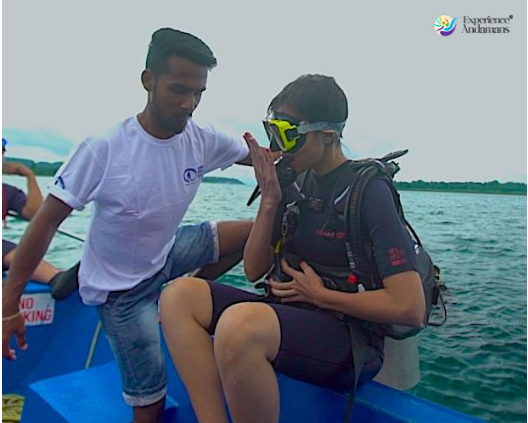
A beginner scuba session should start with a briefing.
The instructor usually explains basic equipment, breathing through the regulator, underwater hand signals, pressure equalisation, and what to do if you feel uncomfortable.
These instructions matter because communication changes underwater.
You cannot simply speak to the instructor, so hand signals become essential.
You learn how to say:
- I am OK
- Something is wrong
- Go up
- Stop
- Continue
This preparation can make the first few minutes underwater much easier.
What Does Breathing Underwater Feel Like?
For most first-time divers, breathing is the biggest adjustment.
At first, using a regulator feels unfamiliar.
The best approach is to stay calm and breathe slowly.
Do not rush.
Once your breathing becomes comfortable, you stop focusing so much on the equipment.
That is when you start noticing the underwater environment.
For many beginners, this is the point where scuba changes from something slightly intimidating into something exciting.
Do You Need to Be a Strong Swimmer?
Requirements depend on the type of scuba programme.
Some supervised introductory experiences may have different swimming requirements from formal certification courses.
This distinction is important.
Trying scuba under close professional supervision is not the same as becoming a certified diver.
If you are not confident in the water, ask the dive operator about the exact requirements before booking.
It is always better to understand the programme clearly in advance.
Your First Dive Is Not About Depth
Many beginners ask how deep they will go.
But depth is not the best way to measure a first scuba experience.
Comfort matters more.
A successful first dive is one where you can breathe calmly, communicate properly, and enjoy what you see around you.
There is no need to compare yourself with experienced divers.
Good diving develops gradually.
What Might You See Underwater?
Marine life varies by location and conditions, so nothing should be guaranteed.
Depending on the dive site, you may see tropical reef fish, coral formations, and other marine life.
Instead of creating a checklist of animals you must see, focus on the entire experience.
Observe the reef.
Watch how fish move.
Notice the changing light underwater.
Sometimes the small details become the most memorable part of the dive.
Shore Dive or Boat Dive?
Beginners may come across both shore-based and boat-based diving options.
A shore dive usually allows participants to enter the water gradually from the beach.
This can feel more comfortable for nervous first-time divers.
A boat dive involves travelling to a dive location and entering from the boat.
Neither option is automatically better.
The right choice depends on the dive site, sea conditions, programme type, and your own comfort level.
Ask the operator to explain the difference before booking.
How Should You Choose a Dive Experience?
Do not choose only by price.
Ask what the experience includes.
Check:
- instructor supervision
- briefing time
- equipment
- shore or boat entry
- approximate duration
- medical requirements
- photo or video inclusions
- experience level needed
The most important thing is selecting a programme that matches your skills.
A complete beginner and a certified diver should not choose the same type of experience simply because the price looks attractive.
Do Not Overload Your Havelock Itinerary
Scuba deserves some space in your travel plan.
Avoid combining a dive with several major activities and a tight ferry connection on the same day.
Island travel can be affected by weather, sea conditions, and transport timing.
A more relaxed schedule gives you room to enjoy the experience properly.
If possible, keep part of the day free after your dive.
You are on an island holiday, not a race.
What Should You Carry?
For a beginner recreational dive, equipment is usually provided according to the booked programme.
Still, a few personal items are useful.
Carry:
- comfortable swimwear
- towel
- drinking water
- sun protection
- required identification
If you have a medical condition or take regular medication, ask the dive operator in advance whether additional clearance is needed.
Frequently Asked Questions
Is Andaman good for beginner scuba diving?
Yes. Beginner-oriented scuba experiences are available, along with options for certified divers.
Is Havelock good for first-time divers?
Yes. Havelock is one of the main diving locations in Andaman and offers different marine experiences for travellers.
Can beginners try scuba diving?
Yes, introductory experiences are available for people with no previous scuba-diving experience, subject to programme requirements.
Is swimming compulsory?
Requirements vary. Introductory diving and certification programmes may have different swimming requirements.
Should I dive on the same day as my ferry?
It is better to keep some flexibility around marine activities and important transfers.
Final Thoughts
Scuba diving gives travellers a completely different way to experience the Andaman Islands.
Your first dive does not need to be deep or complicated.
It simply needs to be comfortable enough for you to enjoy being underwater.
Choose the right programme.
Listen carefully during the briefing.
Communicate honestly.
Do not rush.
And give yourself enough time on Havelock to enjoy the island both above and below the surface.
For some travellers, scuba will remain one unforgettable holiday activity.
For others, that first underwater breath may become the beginning of a much longer journey.
