

Godspeed Sizing and Fit: How to Get It Right
The most expensive mistake with this label is sizing, and it is a structural problem rather than a careless one. The house silhouette is boxy and oversized-relaxed, so the garment already carries volume you did not ask for and your usual sizing instincts stop working. By the time you realise you ordered wrong, the size you needed may not exist, since the runs are small. With hoodies observed between $200 and $270 in 2026 market estimates, matching sets at $155 to $360, denim near $250 and cargo pants around $350, a mistake is not a trivial sum. This guide sets out a body-measurement starting point in inches and centimetres, then works through each category. Having a tape measure nearby is how this guide is meant to be read.
Measure Yourself Before Anything Else
Every useful sizing decision starts with numbers taken from your own body, rather than from something already hanging in your wardrobe. Most cases are resolved by chest and natural waist circumference, with sleeve and inseam handling the rest. At the fullest point of the chest, tape level under the arms and one finger of slack so nothing compresses. The waist goes above the hip bone and below the ribs, not where jeans usually sit. Heavy fleece throws in two inches, or five centimetres, of error, so work over bare skin or a thin shirt. Write both units down, https://godspeedshirt.org/ since product information appears in both and converting in a hurry is where errors slip in.
- Chest: take the fullest point with the tape level and one finger of slack.
- The natural waist: sit the tape above the hip bone and below the ribs, stomach relaxed.
- Sleeve length: from the centre back of the neck, over the shoulder, to the wrist bone.
- Body length: highest point of the shoulder down to where you want the hem.
- The inseam: take it barefoot, crotch seam to floor, for a stacked leg.
The Reference Table
With one caveat attached: the table below translates body measurements into a starting letter size. Treat them as general body-measurement bands, not an official chart published by the brand, good for a defensible starting point but not a guarantee. A table like this always loses to a product page that lists its own garment measurements. Keep the two sorts of number separate: body measurements describe you; garment measurements describe the piece laid flat. The final column describes how each band behaves once the boxy house cut is applied, something a standard chart never tells you. Use chest for tops, waist for bottoms, and read across the row rather than down.
| Letter size | Chest (in) | Chest (cm) | Waist (in) | Waist (cm) | How it wears in a boxy cut |
|---|---|---|---|---|---|
| S | 35 to 37 | 89 to 94 | 28 to 30 | 71 to 76 | Relaxed on a slim frame; short through the body |
| M | 38 to 40 | 97 to 102 | 31 to 33 | 79 to 84 | Wide across the chest, not far off true oversized |
| L | 41 to 43 | 104 to 109 | 34 to 36 | 86 to 91 | Fully oversized, with sleeves sitting long |
| XL | 44 to 46 | 112 to 117 | 37 to 39 | 94 to 99 | Wide indeed; length grows slower than width |
| 2XL | 47 to 49 | 119 to 124 | 40 to 42 | 102 to 107 | Volume is the story here; go up only when you need length |
| 3XL | 50 to 52 | 127 to 132 | 43 to 45 | 109 to 114 | Width at its maximum; look closely at the shoulder drop |
What Actually Changes With a Boxy Cut
Cut wide relative to its length is what makes a garment boxy, and that is not the same as being large. Chest and body length grow together on a conventional tee, keeping the proportions roughly constant. Because width increases faster than length in a boxy cut, each step up makes the piece squarer rather than longer. Size up for length on a boxy godspeed shirt and you gain width and almost no length. Practically speaking, body length is the limiting number for taller wearers, not chest. If you are over about six foot two, or 188 centimetres, check body length first and live with the width that follows.
The Size-Down Decision
By far the most common god speed clothing question is whether to size down, and the answer depends on what you want the piece to look like. Where you want the silhouette as designed, take your true size from the table and leave it there. If you want a normal relaxed fit instead of an obviously oversized one, one size down usually achieves it on tops. You pay for it in body and sleeve length, which is fine on a tee and noticeable on a hoodie. Sizing down fails on outerwear, because a layering jacket stops working over fleece as soon as a size comes off. Size down only on tops, only by one, and only deliberately.
Hoodies and Heavyweight Fleece
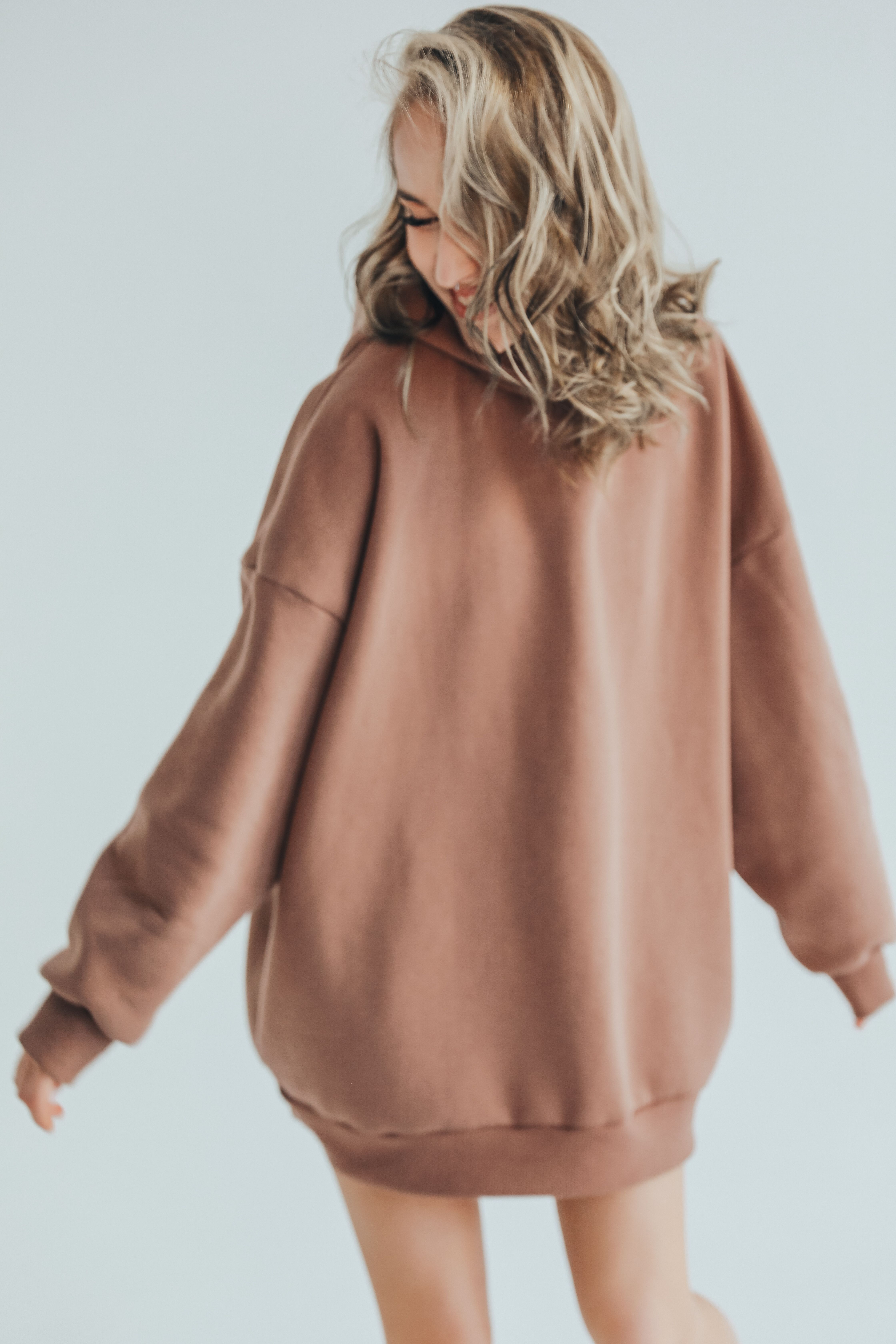
A godspeed hoodie is the clearest example of the way fabric weight changes sizing while thin material does not. Dense fleece stands off the body rather than draping, so it holds its own shape and adds bulk beyond its measurements. Two garments with identical flat measurements and the heavy hoodie still reads larger than the light sweatshirt. Pullovers and zip-through versions behave differently too, since the zip adds structure down the front and limits how much the body billows. Fleece pulls in slightly on a hot wash, so choose the fit you want, then wash cold to keep it. Size a hoodie to your body if it will live under a jacket, as the outerwear already carries the extra room.
T-Shirts and Layering Pieces
Tees are the most forgiving category and the cheapest place to learn how the sizing runs. Observed 2026 market estimates put them between $128 and $200, with most around $150 to $170, sleeveless near $170 and long sleeve near $200. With no fabric weight to disguise it, the boxy cut is most visible here, and the shoulder seam sits past the shoulder point deliberately. Layered and long sleeve styles sit slightly closer through the body than the standard short-sleeve tee. Sleeveless pieces run wider at the armhole than most people expect, so sizing down is worth considering there. Getting two sizes of godspeed shirts side by side beats guessing wrong on a $350 cargo pant.
Bottoms: Sweatpants, Cargos and Denim
Read bottoms from the waist column, not the chest, and treat leg length as the second variable. Sweatpants in a matching set are cut relaxed and usually track true waist size without any adjustment. Cargo pants and premium denim are wider through the thigh and close with a flared or stacked hem, meant to pool over the shoe instead of breaking cleanly. If a pair looks too long out of the bag, it is usually correct, and hemming strips out the shape the pattern was built around. The denim observed around $250 is garment washed, and washed cotton loosens at the waist with wear, so the tighter of the two options often wins. Each half of a matching set gets sized on its own.
Outerwear: Varsity, Moto and Puffer
Outerwear leaves the least room for error, and the reason is scarcity, not construction. Runs of 200 units with numbered authenticity tags were stated for the F.T.D and Chrome Seduction varsity jackets, so an exchange is not a realistic fallback. Vegan leather and vegan suede do not stretch, so on a wool-bodied varsity with those sleeves, a snug sleeve on day one is a snug sleeve forever. Do not add a size for fleece; take your true size, since the wool body already allows for a layer underneath. Shoulder fit decides whether a leather moto works at all, and it gives even less than the varsity. The puffer is the exception; a slightly larger size is defensible there, since the insulation compresses.
Mistakes to Avoid
A few repeated assumptions, rather than bad luck, are behind most sizing failures. People use a garment they already own as the benchmark without asking whether it was cut boxy or conventional. They go up a size for length on a cut where length hardly changes, or size down for a cleaner line on a jacket that needs the room. Some measure over a thick layer, or put the tape at the trouser line, and end up a full size out. One more group buys a matching set in a single size out of habit, then discovers the top fits and the bottoms do not. Nearly all of it is prevented by the checks below.
- The body, never a favourite hoodie, is what gets measured, in both inches and centimetres.
- Look up the product page’s own flat measurements before trusting any general table.
- Before choosing a size, decide between intended oversized and relaxed.
- Treat body length as the limiting number if you are tall, not the chest width.
- Do not size down on wool or vegan-leather outerwear; nothing there stretches back.
- Size each half of a set on its own and make sure both are still in stock.
